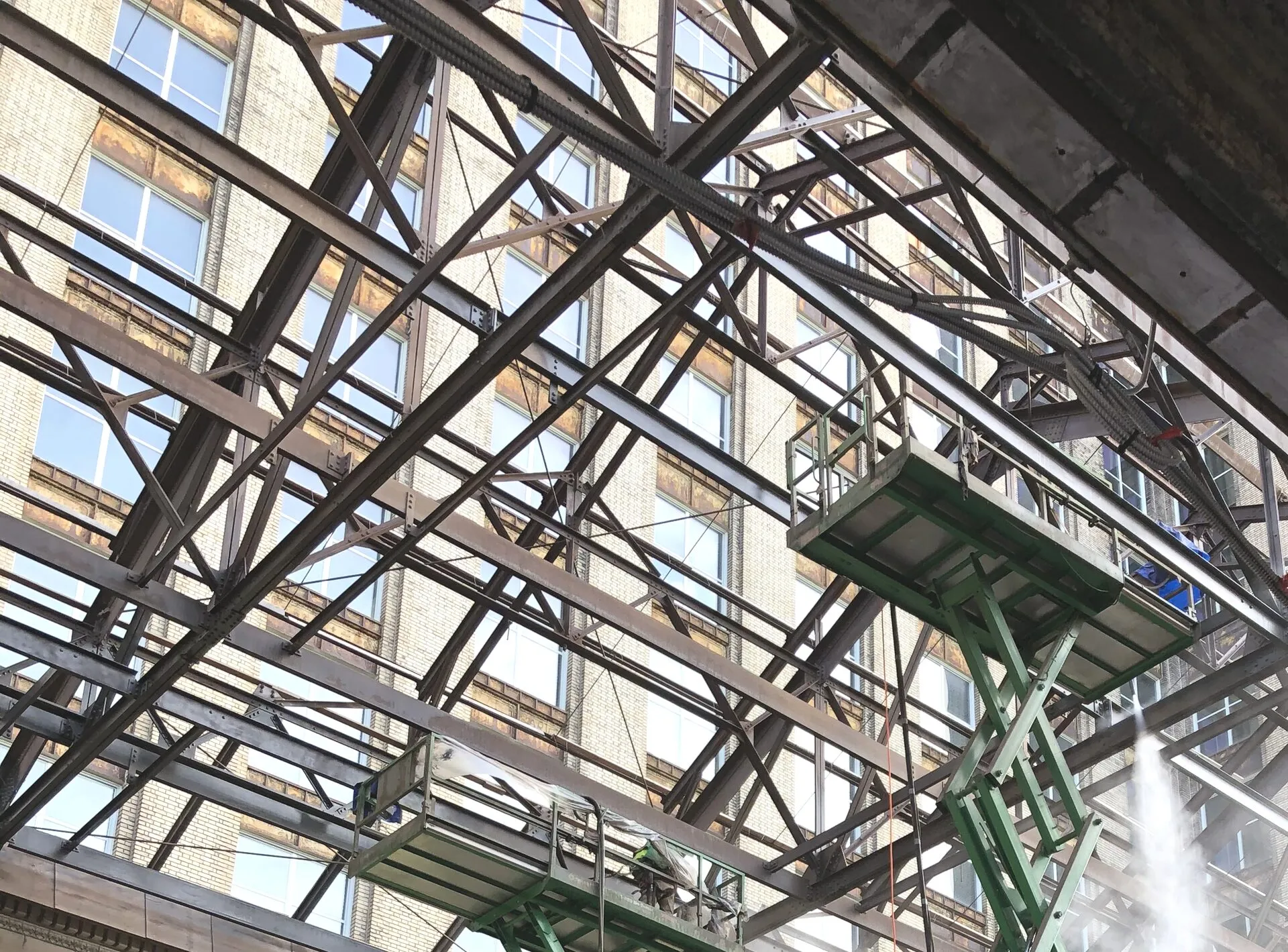
Every plant maintenance team eventually has the same conversation: the current degreasing program works, but it’s slow, it generates waste that has to be disposed of correctly, and it’s starting to show up as a real line item in the maintenance budget. Chemical degreasers have been the default for decades because they’re familiar and effective at cutting grease. Dry ice blasting has become the alternative maintenance teams increasingly evaluate — not because chemical degreasing doesn’t work, but because the total cost of using it keeps climbing.
How the Two Methods Actually Compare
Chemical degreasing works by dissolving grease and oil chemically, which means the degreaser has to dwell on the surface, then be rinsed, collected, and in many cases treated as regulated waste depending on the solvent used and what it picked up. The equipment often needs a drying period before it’s safe to run again, and residual degreaser can leave a film that attracts dust and buildup faster on the next cycle.
Dry ice blasting dislodges grease and carbon mechanically through kinetic impact and thermal shock, and the CO₂ pellets sublimate on contact — there’s no chemical to rinse and no wastewater to collect. The only material left to deal with is the grease or carbon that was removed, not a chemical byproduct.
Where the Real Cost Differences Show Up
Disposal and regulatory handling. Spent chemical degreaser and rinse water often qualify as regulated waste depending on the solvent and what it contains after use, which means documented disposal costs and potential reporting requirements. Dry ice blasting generates no chemical waste stream — the disposal burden is limited to whatever contaminant was removed, the same as it would be with any cleaning method.
Downtime. Chemical degreasing requires dwell time, rinse time, and often a drying period before equipment restarts. Dry ice blasting typically allows equipment to return to service immediately after cleaning since there’s no moisture or chemical residue left behind.
Equipment condition over time. Repeated chemical exposure can degrade seals, gaskets, and certain coatings over years of use. Dry ice blasting’s non-abrasive, chemical-free process doesn’t introduce that same cumulative exposure.
Worker exposure. Chemical degreasers carry inhalation and skin contact exposure risks that require PPE and, in some cases, air monitoring depending on the solvent. Dry ice blasting’s primary safety considerations are pellet velocity, noise, and CO₂ concentration in enclosed spaces — a different risk profile, but one that doesn’t involve solvent exposure.
Where Chemical Degreasing Still Makes Sense
Chemical degreasing isn’t obsolete. For very light residue, small parts that can be dip-cleaned in a controlled parts washer, or situations where a facility already has a fully compliant chemical handling and disposal program in place, chemical degreasing can still be the more economical choice on a per-use basis. The comparison changes based on frequency, equipment size, and how much of the cost of chemical cleaning is currently being absorbed without being tracked as a line item.
Making the Switch — or Not
The maintenance teams that get the most value from switching to dry ice blasting are typically the ones already running a frequent cleaning cycle on larger equipment — production lines, packaging equipment, industrial machinery — where downtime and disposal costs compound with every cycle. For infrequent, small-scale cleaning, the case for switching is weaker. The right answer is usually a plant running both methods, matched to the job, rather than eliminating one entirely.
Blasting Jack provides dry ice blasting for industrial plant maintenance throughout Michigan. Contact us to evaluate whether dry ice blasting fits your facility’s maintenance cleaning cycle.