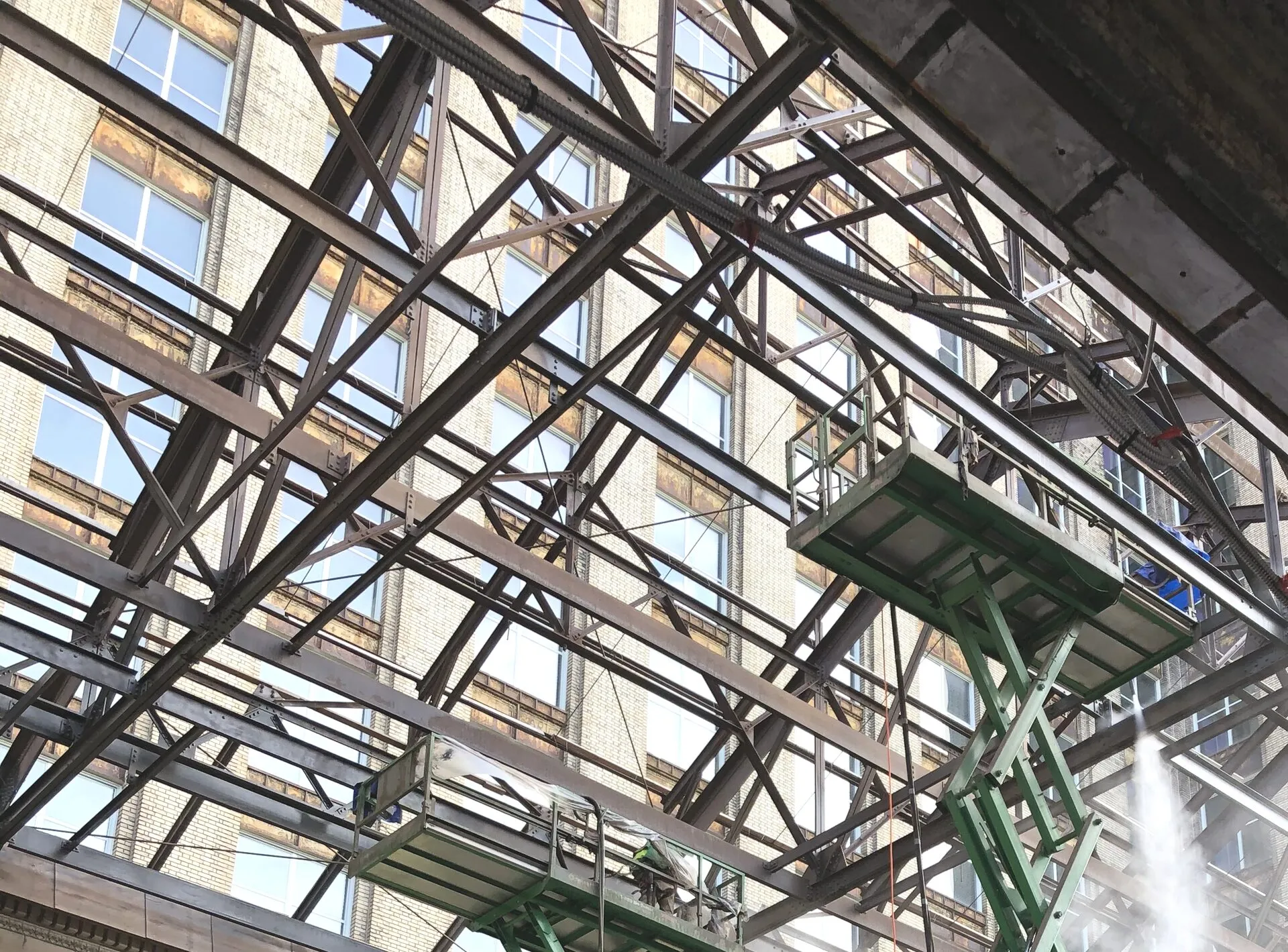
Fire restoration work runs on a tight margin between doing the job thoroughly and doing it fast enough that the client isn’t paying for a building they can’t use. Soot and smoke residue penetrate framing, ductwork, and structural surfaces in ways that are slow to clean by hand and easy to spread further with the wrong method. Sanding kicks soot particulate into the air. Chemical smoke removers add moisture and odor-masking agents that don’t always hold up. Dry ice blasting has become a standard tool for restoration contractors who need soot removal that’s fast, thorough, and doesn’t create a second cleanup problem.
Why Soot and Smoke Residue Respond Well to Dry Ice Blasting
Soot is a fine, often greasy particulate that bonds to porous surfaces — wood framing, masonry, HVAC interiors, concrete. The combination of kinetic impact and extreme cold (−109°F) from dry ice pellets fractures soot and smoke residue loose from the substrate without driving it deeper into the material’s pores, which is a real risk with pressure washing or aggressive scrubbing. Because the CO₂ sublimates on contact, there’s no water added to a structure that’s often already had water damage from firefighting efforts — a real consideration when the restoration goal is drying out the structure, not adding to the moisture load.
Where It Fits on a Fire Restoration Job
Structural framing. Exposed studs, joists, and rafters with smoke staining can be cleaned to bare wood without the sanding dust that spreads soot particulate through the rest of the structure — and without introducing moisture that delays the rebuild timeline.
HVAC systems and ductwork. Smoke residue travels through HVAC systems well beyond the fire’s origin point. Dry ice blasting cleans duct interiors and equipment without disassembling the entire system, and without leaving media residue that would circulate through the ductwork afterward.
Masonry and concrete. Foundations, block walls, and masonry surfaces with soot staining clean up without water intrusion into the material — important on a job where moisture control is already a primary concern.
Mechanical and electrical equipment. Furnaces, water heaters, and electrical panels affected by smoke (but not directly fire-damaged) can often be cleaned in place because dry ice blasting is non-conductive and moisture-free — potentially saving equipment that would otherwise be replaced.
Contents and structural components salvage. Where a client wants to save architectural millwork, exposed beams, or built-ins rather than replace them, dry ice blasting removes smoke staining without the sanding and refinishing labor that alternative methods require.
Bringing In a Dry Ice Blasting Subcontractor
Most restoration contractors don’t own dry ice blasting equipment — the CO₂ pellet supply chain and specialized blast equipment make it a better fit for a subcontracted specialty than an in-house capability used a few times a year. When scoping a job that includes significant soot removal on structural framing, ductwork, or masonry, bringing in a dry ice blasting crew for that phase can move the schedule faster than sanding crews working the same square footage by hand — and produces a more consistent result for the insurance documentation that typically accompanies a fire restoration claim.
What to Confirm Before the Job Starts
Ventilation planning. Dry ice sublimates into CO₂ gas, which needs adequate air exchange in enclosed structures — this needs to be planned alongside the negative air and containment systems already in use on a restoration site.
Scope coordination. Dry ice blasting removes soot and smoke residue; it doesn’t address structural fire damage requiring replacement, and it’s not a mold remediation method on its own (though it’s also effective for mold when that’s a separate scope item on the same job).
Blasting Jack works with restoration contractors across Michigan on dry ice blasting scopes for fire and smoke damage jobs. Contact us to discuss bringing dry ice blasting onto your next restoration project.